SafeBase Alternative
Why EU companies are looking beyond SafeBase — and what to look for in a trust center built for European buyers.
SafeBase Alternative: Why EU Companies Are Looking Elsewhere
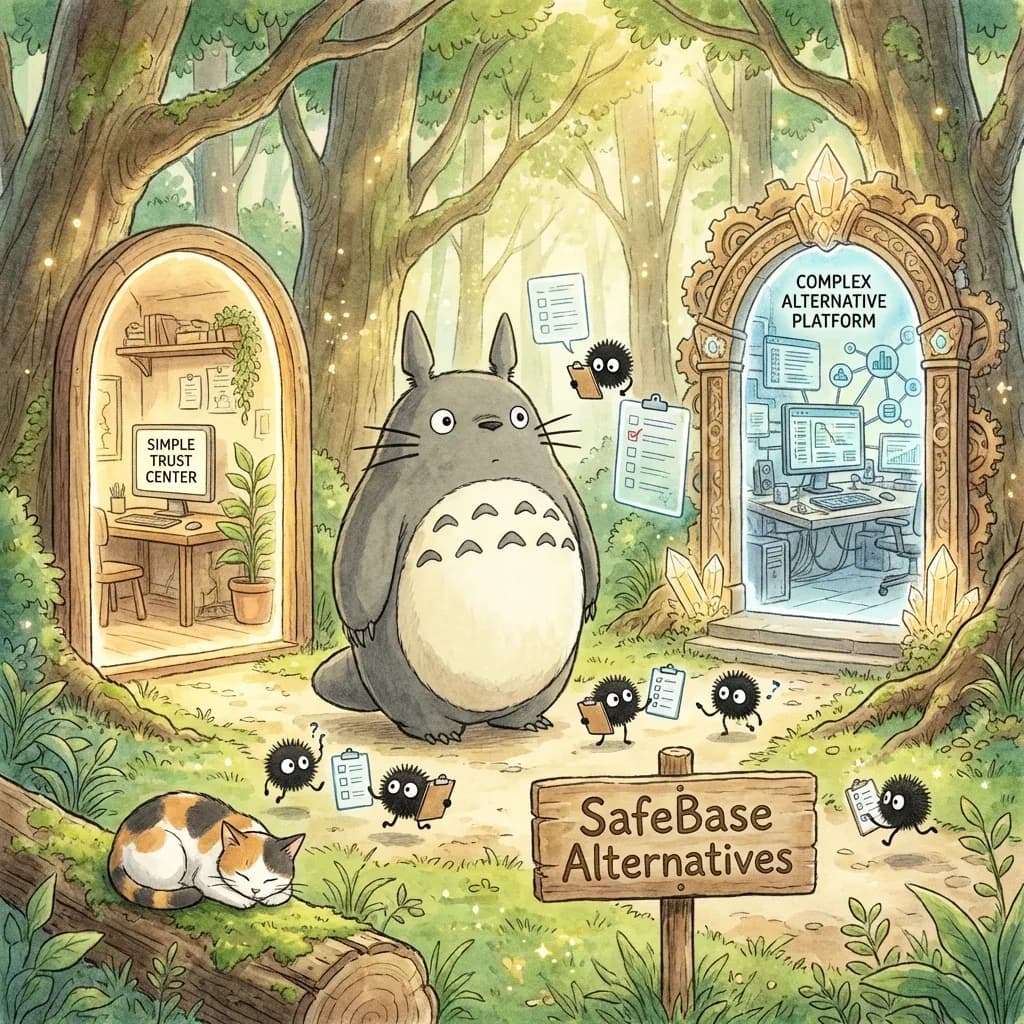
SafeBase is a strong trust center platform — but it was built for US SaaS companies selling to US buyers. If you're a European company navigating GDPR, NIS2, and DORA, you may find yourself paying enterprise prices for features that should be default. This article explains what European buyers should look for in a SafeBase alternative.
TL;DR
SafeBase pioneered the trust center category and remains a solid choice for US-centric enterprises. But European companies often hit friction: US-default hosting, opaque pricing, SOC 2-first positioning, and potential CLOUD Act exposure. Orbiq is built specifically for EU companies — with EU hosting by default, transparent pricing, and GDPR/NIS2/DORA as first-class frameworks.
What SafeBase Does Well
Let's be fair: SafeBase earned its market position.
It was one of the first dedicated trust center platforms, and it's widely used by US SaaS companies to centralise security documentation and automate security reviews. The platform offers deep Salesforce and CRM integrations, sophisticated access controls, AI-powered questionnaire automation, and analytics that tie trust center activity to pipeline and ARR. For large US companies with complex security review workflows, SafeBase delivers.
The Drata acquisition in early 2025 added compliance automation capabilities to the mix, making SafeBase part of a broader GRC ecosystem. If you're already in that ecosystem and your primary market is the US, SafeBase is a reasonable default.
But "reasonable default for US companies" is not the same as "right fit for European companies."
Where European Buyers Hit Friction
European companies evaluating SafeBase tend to encounter the same set of problems — not because SafeBase is bad, but because it wasn't built with EU requirements as the starting point.
1. US Hosting by Default
SafeBase's infrastructure defaults to US hosting. EU data residency is typically available, but it's positioned as an enterprise feature — meaning you negotiate for it, pay more for it, or discover it's only available on higher tiers.
For a European company whose customers expect EU data residency by default, this creates friction before you've even started.
2. Data Sovereignty and the CLOUD Act Problem
Even "EU hosting" from a US-headquartered vendor doesn't solve the sovereignty question.
Under the US CLOUD Act, US authorities can compel US companies to hand over data — regardless of where that data is physically stored. If your trust center contains sensitive security documentation, penetration test reports, or detailed compliance evidence, this matters.
True data sovereignty requires EU-based infrastructure and an EU-based corporate structure. "EU region" from a US vendor is residency, not sovereignty.
3. Pricing Opacity
SafeBase's public materials push "contact sales" rather than published pricing. This is standard for enterprise software, but it creates problems for European startups and mid-market companies:
- You can't quickly evaluate whether it fits your budget
- You're forced into a sales process before knowing ballpark costs
- Smaller companies often discover they're not the target customer
European founders and security engineers consistently cite pricing transparency as a key factor when choosing tools. The "contact sales" model signals enterprise focus — which may not match your stage or budget.
4. SOC 2-First, Everything Else Second
SafeBase's positioning, documentation, and case studies lean heavily toward SOC 2 — the dominant US compliance framework. ISO 27001 is supported, but it's not the hero.
For European companies, the priority order is often reversed:
- ISO 27001 — the baseline for EU enterprise sales
- GDPR — mandatory, not optional
- NIS2 — increasingly relevant for supply chain security
- DORA — mandatory for financial services and their suppliers
If your trust center platform treats these frameworks as secondary, your content structure, templates, and visitor experience will reflect that.
5. Subprocessor Transparency
European procurement teams and DPOs want to see subprocessors and data locations upfront — not buried in a PDF behind an NDA wall. This is table stakes for GDPR Article 28 compliance and standard practice in EU vendor assessments.
Trust centers built for US buyers often gate this information more aggressively, because the US market is less accustomed to demanding it publicly.
What European Companies Should Look For
If you're evaluating SafeBase alternatives as a European company, here's what matters:
EU Data Residency by Default
Not as an enterprise add-on. Not "available upon request." Default.
Your trust center stores security documentation, compliance evidence, and potentially sensitive details about your infrastructure. It should be hosted in the EU unless you have a specific reason to choose otherwise.
True Data Sovereignty
Ask where the vendor is headquartered. If it's the US, your data may be subject to US legal access regardless of where it's hosted.
For regulated industries (financial services, healthcare, critical infrastructure), this distinction increasingly matters — especially under NIS2 and DORA.
Transparent Pricing
You should be able to see pricing before talking to sales. Ideally:
- Published pricing page
- Free tier for evaluation
- Clear upgrade path without surprise enterprise minimums
EU Frameworks as First-Class Citizens
Your trust center should make it easy to present:
- ISO 27001 certification status
- GDPR compliance documentation (DPA, subprocessor list, privacy policy)
- NIS2-relevant security controls
- DORA compliance evidence (for financial services)
If the platform's templates and structure assume SOC 2 is primary, you'll spend time working around that assumption.
Standalone Deployment
Some trust centers only exist as features of larger GRC platforms. If you're not ready to adopt a full compliance automation suite — or you already have one — you shouldn't be forced to buy a bundle.
SafeBase vs Orbiq: Side-by-Side
| Factor | SafeBase | Orbiq |
|---|---|---|
| Headquarters | US (now part of Drata) | EU (Germany) |
| Default hosting | US; EU available on enterprise tiers | EU by default |
| Data sovereignty | Subject to US CLOUD Act | EU jurisdiction |
| Pricing | Contact sales; enterprise-oriented | Published pricing; free tier available |
| Primary frameworks | SOC 2-first, ISO 27001 supported | ISO 27001, GDPR, NIS2, DORA as equals |
| Deployment | Standalone, but increasingly bundled with Drata | Standalone trust center |
| CRM integrations | Deep Salesforce, HubSpot, etc. | API/webhook-driven; native integrations emerging |
| AI questionnaire automation | Strong, mature | Emerging |
| Subprocessor display | Available, often gated | Public by default, clearly displayed |
| Target market | US enterprise and growth-stage | EU startups and mid-market |
Things European Teams Care About
This section mirrors what we highlight on our homepage — features that matter specifically to EU buyers:
Hosted in the EU
With near-zero third-party dependency. Your trust center data stays in the EU, processed by EU infrastructure, governed by EU law.
Patched and Pentested
Every week, regularly. Security tooling should practice what it preaches. We publish our own security posture in our trust center — the same way we help you publish yours.
Actions Audit Logged
John edited, Jane deleted, you know it all. Full audit trail for compliance evidence and internal accountability.
When SafeBase Is Still the Right Choice
We're not going to pretend Orbiq is right for everyone. SafeBase makes sense if:
- You're US-headquartered with a primarily US customer base
- You need deep CRM integration — native Salesforce workflows, opportunity tracking, ARR attribution
- You're already in the Drata ecosystem and want tight compliance automation integration
- You have enterprise budget and prefer sales-led procurement
- Questionnaire volume is your primary pain — SafeBase's AI automation is mature
If those describe your situation, SafeBase is a defensible choice. The friction points we've outlined matter less when your customers don't prioritise EU data sovereignty and your budget accommodates enterprise pricing.
How Orbiq Approaches This Differently
Orbiq was built for European companies from the start. That's not a marketing statement — it's a structural choice that affects everything:
EU hosting is default, not an upsell. You don't negotiate for it or discover it's enterprise-only.
Pricing is published. Free tier to start, paid tiers with clear feature boundaries. No "contact sales" wall.
GDPR, NIS2, and DORA are first-class frameworks. Our templates, content structure, and documentation assume you need to demonstrate EU compliance — not retrofit it onto a SOC 2-first structure.
Subprocessors are visible. Your visitors can see where data goes without requesting access or signing NDAs for basic information.
Standalone by design. We're a trust center, not a GRC platform with a trust center bolted on. Use us alongside your existing compliance tools.
Frequently Asked Questions
Is SafeBase GDPR compliant?
SafeBase can be used in a GDPR-compliant manner, but the default configuration is US-centric. EU hosting typically requires enterprise-tier contracts, and as a US company, SafeBase remains subject to the CLOUD Act regardless of where data is stored. European companies should evaluate whether "GDPR compliant" means residency, sovereignty, or both.
Does SafeBase offer EU hosting?
Yes, but usually as an enterprise feature rather than default. You'll need to confirm availability and pricing for your specific tier. This contrasts with EU-native platforms where EU hosting is the starting point.
What's the best trust center for European companies?
It depends on your requirements. If you prioritise EU data sovereignty, transparent pricing, and frameworks like ISO 27001/NIS2/DORA over SOC 2, look for platforms built with EU buyers as the primary audience — not as a secondary market. Orbiq, for example, is designed specifically for this use case.
Can I use SafeBase if I'm a European company?
Yes. Many European companies use SafeBase successfully, particularly those with US operations or customers. The question is whether you're paying for features that should be default (EU hosting) and whether the platform's SOC 2-first orientation matches your compliance priorities.
How does Orbiq compare to SafeBase on AI features?
SafeBase has more mature AI questionnaire automation. Orbiq's AI capabilities are emerging, focused initially on in-portal search and structured content that AI tools can parse accurately. If high-volume questionnaire automation is your primary need, SafeBase is currently stronger. If your priority is a clean, EU-native trust center with transparent pricing, Orbiq fits better.
Key Takeaways
- SafeBase is strong for US enterprise — but its defaults don't match EU requirements
- EU hosting ≠ EU sovereignty — CLOUD Act exposure persists with US vendors
- Pricing transparency matters — "contact sales" often signals enterprise-only focus
- Framework priority differs — SOC 2-first vs ISO 27001/GDPR/NIS2-first
- Standalone options exist — you don't need a full GRC suite for a trust center
See How Orbiq Works
If EU data residency, transparent pricing, and GDPR/NIS2/DORA-native structure matter to your organisation, Orbiq might be what you're looking for.
→ View our Trust Center (yes, we use our own product)
Related reading
- SafeBase Pricing 2026: Plans, Real Costs & the Drata Acquisition Effect
- Best Drata Alternative for EU Companies (2026)
- Best Trust Center Platforms in 2026
- Trust Center vs. ISMS vs. Deal Room
- EU Data Sovereignty vs. Residency
- GDPR Articles 28, 32, 33, and 34
- What Enterprise Buyers Check Before Signing a Vendor Contract